
What Helps with Urinary Incontinence?
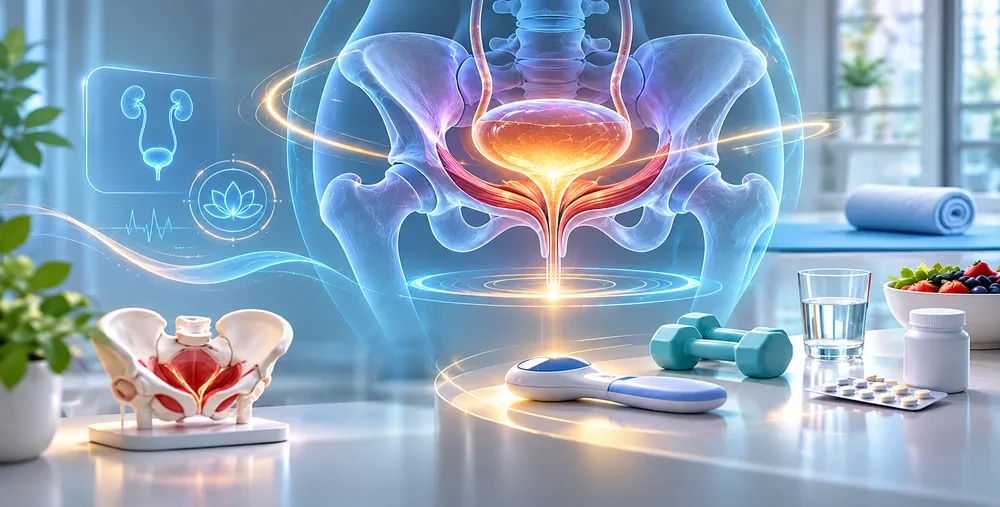
Leaking a few drops of urine when coughing, tightening your muscles when laughing, or constantly looking for the nearest restroom out of fear of not reaching the toilet in time are problems that can affect many women's daily and social lives. These symptoms, which often become more common after childbirth and during menopause, are frequently dismissed as a normal part of aging.
However, urinary incontinence is a treatable health condition. Pelvic floor exercises, bladder training, weight management, surgical procedures, and certain lifestyle changes can help manage urinary incontinence in women.
Nevertheless, not all cases of urinary incontinence have the same underlying cause. The most appropriate treatment for urinary incontinence depends on when urine leakage occurs and what is causing it.
What Is Urinary Incontinence and What Causes It?
Urinary incontinence is the involuntary loss of bladder control, resulting in unintentional urine leakage.
In women, pregnancy, childbirth, menopause, excess body weight, and weakening of the pelvic floor muscles can increase the risk of urinary incontinence.
Urinary tract infections, overactive bladder, and certain neurological conditions may also cause this problem.
What Helps with Urinary Incontinence in Women?
The most suitable treatments for urinary incontinence in women depend on the type of incontinence. In mild cases, non-surgical treatment options may be effective.
-
Kegel Exercises: Strengthen the pelvic floor muscles that help control urination.
-
Bladder Training: Helps gradually regulate and extend the intervals between bathroom visits.
-
Weight Management: Losing excess weight reduces pressure on the bladder.
-
Reducing Caffeine Intake: Limiting excessive tea and coffee consumption may help reduce sudden urges to urinate.
-
Preventing Constipation: Reduces straining and pressure on the pelvic floor muscles.
The benefits of these methods usually develop gradually. If symptoms persist, a medical examination is necessary.
When appropriate, a physician may recommend a suitable surgical procedure to treat urinary incontinence.
How Can Urine Leakage When Coughing or Sneezing Be Treated?
Urine leakage during coughing, sneezing, laughing, or lifting heavy objects is known as stress urinary incontinence.
This occurs when the muscles and tissues supporting the bladder outlet and urethra do not provide sufficient support.
One of the initial treatment options is a supervised pelvic floor muscle training program lasting at least three months.
If significant symptoms continue despite regular exercises, surgical treatment may be considered.
Prof. Dr. İsmail Mete İtil, an obstetrician and gynecologist in Izmir, provides individualized treatment plans for urinary incontinence by evaluating the patient's examination findings and diagnostic test results.
Do Kegel Exercises Help with Urinary Incontinence?
Yes. Kegel exercises are an effective treatment method, particularly for urinary incontinence that occurs during coughing or sneezing.
During these exercises, the pelvic floor muscles are tightened as if trying to prevent passing gas. The contraction is held for a few seconds before the muscles are relaxed.
It is important to avoid unnecessarily tightening the abdominal, buttock, and thigh muscles.
A commonly recommended program involves performing at least eight contractions per session, three times a day. However, correctly identifying and activating the pelvic floor muscles is essential.
The exercises should be performed regularly and should not be practiced by repeatedly stopping the flow of urine.
What Helps with Sudden Urges to Urinate and Leakage Before Reaching the Toilet?
Urine leakage that occurs after a sudden, strong urge to urinate, before reaching the toilet, is known as urge urinary incontinence. Bladder training aims to gradually increase the time between bathroom visits.
Bladder training generally lasts at least six weeks.
If sufficient improvement is not achieved, medications that help control bladder activity or other appropriate treatments may be recommended.
How Can Urinary Incontinence After Childbirth Be Treated?
During pregnancy and childbirth, the pelvic floor muscles may become stretched or weakened.
As a result, some women experience urine leakage when coughing, laughing, or moving after giving birth.
For postpartum urinary incontinence, appropriate pelvic floor exercises are recommended.
What Helps with Urinary Incontinence During Menopause?
Hormonal changes during menopause can affect the tissues of the vagina and urinary tract.
Depending on the type of urinary incontinence, treatment options may include pelvic floor exercises, bladder training, and medication.
For suitable women experiencing vaginal dryness and urinary symptoms associated with menopause, local vaginal estrogen therapy may also be prescribed by a gynecologist.
However, this treatment alone does not resolve every type of urinary incontinence.
Can Urinary Incontinence Be Treated Without Surgery?
Yes. Non-surgical treatments are generally considered first for many types of urinary incontinence in women.
Pelvic floor physiotherapy, bladder training, appropriate medications, and certain supportive devices can help reduce symptoms.
For patients who do not achieve sufficient improvement with non-surgical treatments, surgery may be considered, particularly in cases of stress urinary incontinence.
When Is Surgery Necessary for Urinary Incontinence in Women?
Surgery may be considered when urinary incontinence significantly affects daily life and persists despite appropriate non-surgical treatment.
For stress urinary incontinence, mid-urethral sling procedures or other surgical techniques may be used to support the urethra.
However, treatment for urge urinary incontinence is different.
Before deciding on surgery, the type of urinary incontinence must be accurately identified.
What Tests Are Performed to Diagnose Urinary Incontinence?
Diagnosis begins with a detailed assessment of the patient's symptoms, including when urine leakage occurs.
A urine test may be performed to check for infections or other possible causes.
When necessary, additional assessments may include a bladder diary, pelvic examination, ultrasound, and tests that evaluate urinary flow or bladder function.
Not every patient requires all of these tests.
When Should You See a Doctor for Urinary Incontinence?
Women should consult a qualified obstetrician and gynecologist if urinary incontinence occurs repeatedly, affects daily or social activities, or gradually worsens.
Medical attention should not be delayed if symptoms include blood in the urine, fever, painful urination, or an inability to empty the bladder.
New-onset leg weakness or loss of sensation around the groin, accompanied by loss of bladder control, requires emergency medical evaluation.
Conclusion
Urinary incontinence is not a condition that women must simply accept as an inevitable consequence of aging or childbirth.
Urine leakage when coughing, sudden urinary urgency, and difficulty reaching the toilet in time may have different underlying causes.
Kegel exercises, bladder training, lifestyle modifications, and appropriate medications can help manage and treat urinary incontinence.
Surgical treatment options may also be considered when necessary.
Prof. Dr. İsmail Mete İtil, an Obstetrics and Gynecology Specialist in Izmir, develops individualized treatment plans by evaluating urinary incontinence symptoms, pelvic floor anatomy, and any associated medical conditions.
Medical Disclaimer: This article is intended for informational purposes only and does not replace medical advice, diagnosis, or treatment. Please consult a qualified medical specialist for diagnosis and treatment.
Prof. Dr. İsmail Mete İtil | Obstetrics and Gynecology Specialist