
Is the Uterus Removed During Fibroid Surgery?
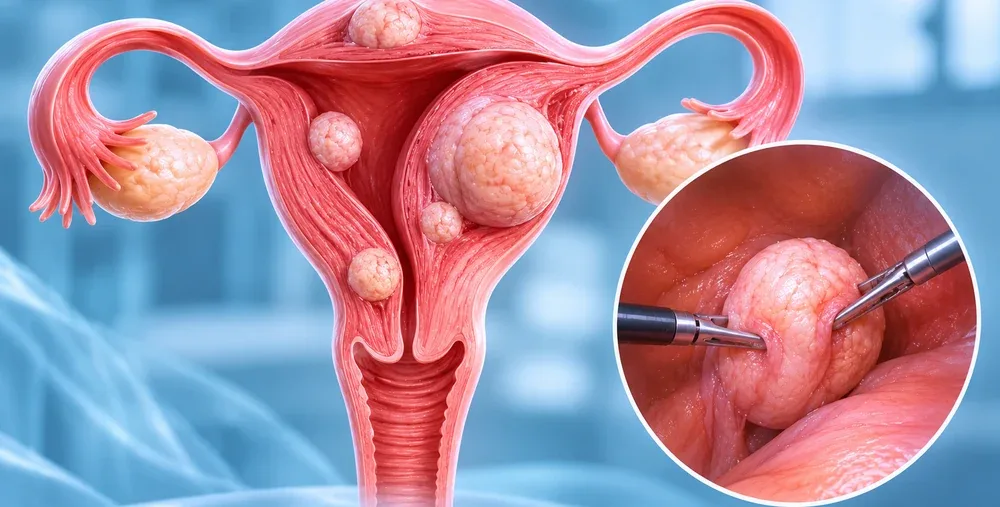
When fibroids are detected in the uterus, one of the greatest concerns for many women is the possibility that the uterus may need to be removed during surgery. This can be particularly worrying for women who are planning to have children or who wish to preserve their uterus. However, undergoing fibroid surgery does not necessarily mean that the uterus will be removed. Today, in suitable patients, modern surgical methods can be used to remove only the fibroids while preserving the uterus. The size of the fibroid, its location within the uterus, the number of fibroids, and the patient’s pregnancy plans all influence which treatment method is preferred. Therefore, the important point in fibroid surgery is not only to remove the fibroid, but also to create an individualized treatment plan by considering the woman’s overall health and future expectations together.
What Is a Fibroid? Does Every Fibroid Require Surgery?
Fibroids are growths that develop from the muscular tissue of the uterus and are usually benign. They may be located inside the uterine cavity, within the muscular wall, or on the outer surface of the uterus.
Not every fibroid requires surgery. Small fibroids that do not cause symptoms can be monitored with regular follow-up examinations.
However, treatment may be necessary when fibroids cause heavy menstrual bleeding, anemia, pelvic pain, pressure on the bladder, or problems related to pregnancy.
Is the Uterus Removed During Fibroid Surgery?
No, removal of the uterus is not always necessary during fibroid surgery. In suitable patients, only the fibroid tissue can be removed while preserving the uterus.
This uterus-preserving surgery is called myomectomy. During the procedure, the fibroids are removed from their location and the uterine wall is repaired with absorbable sutures.
The operation in which the uterus is completely removed is called hysterectomy. This method may be preferred in suitable patients after all necessary tests and clinical findings have been evaluated. However, it is not performed in every patient with fibroids, and the uterus is not routinely removed.
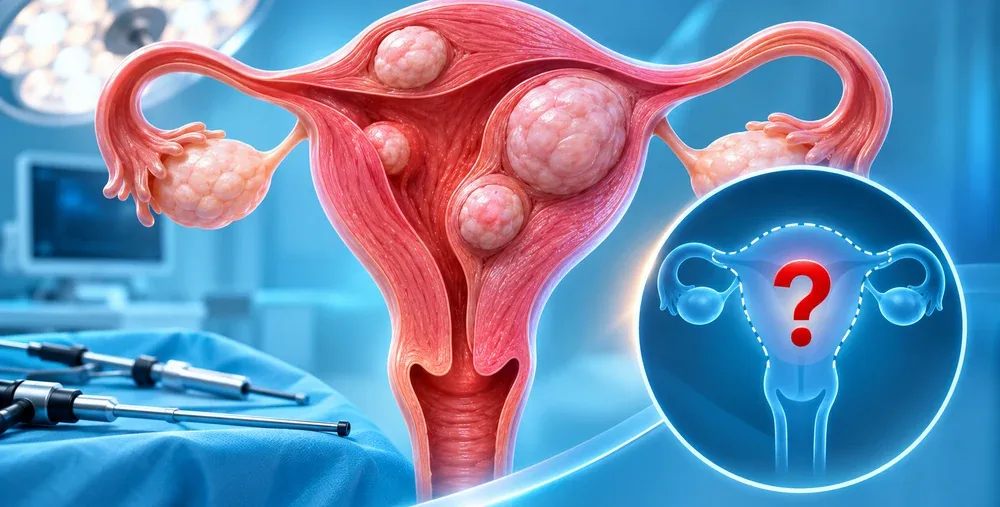
How Is Fibroid Surgery Performed Without Removing the Uterus?
The aim of uterus-preserving fibroid surgery is to remove the fibroids while preserving as much healthy uterine tissue as possible.
Different surgical methods may be used depending on the size and location of the fibroid. These include:
-
Laparoscopic Fibroid Surgery: The fibroids are removed using a camera and surgical instruments inserted through small incisions in the abdomen.
-
Robotic Fibroid Surgery: Robot-assisted surgical instruments are used to remove the fibroids and repair the uterine tissue.
-
Open Fibroid Surgery: In some patients, particularly those with very large or numerous fibroids, the uterus is reached through an abdominal incision.
-
Hysteroscopic Fibroid Surgery: Suitable fibroids that extend into the uterine cavity can be removed by entering through the vagina and cervix with a camera.
The surgical method to be used is determined according to the examination and imaging results.
Why Is the Uterus Removed During Fibroid Surgery?
Removal of the uterus may be considered especially in women who have severe symptoms and do not wish to preserve their uterus or do not plan a future pregnancy. The presence of very large or numerous fibroids, inadequate response to other treatments, or accompanying uterine conditions may also influence this decision.
However, having a large fibroid alone does not necessarily mean that the uterus must be removed. Whether the uterus can be preserved depends on the characteristics of the fibroids and the findings of a detailed surgical evaluation.
In rare cases, severe bleeding that cannot be controlled during uterus-preserving surgery may also make hysterectomy necessary. This possibility should be discussed with the patient before surgery.
Is the Uterus Preserved During Laparoscopic Fibroid Surgery?
Yes, the uterus is preserved during laparoscopic fibroid surgery. The aim of laparoscopic or robotic myomectomy is to remove only the fibroids.
In suitable patients, minimally invasive surgery may offer advantages such as smaller incisions and a shorter recovery period.
However, not every fibroid can be removed with a minimally invasive technique. The number, size, and location of the fibroids within the uterus are important when determining the surgical approach.
Can You Become Pregnant After Fibroid Surgery?
Pregnancy may be possible after uterus-preserving fibroid surgery. In suitable patients, removing certain fibroids that affect the uterine cavity and may interfere with pregnancy can improve the chance of conception.
However, pregnancy cannot be guaranteed after surgery. The woman’s age, ovarian reserve, and other reproductive health factors are also important.
Is Treatment Possible Without Fibroid Surgery?
Not every fibroid needs to be surgically removed. In some patients, medication can be used to control heavy menstrual bleeding. In suitable cases, procedures such as embolization, which blocks the blood vessels supplying the fibroid, or other treatments aimed at reducing fibroid size may be considered.
However, these methods are not suitable for every patient. In particular, for women planning pregnancy, the possible effects of treatment on fertility should be carefully considered.
Conclusion: Uterus-Preserving Fibroid Surgery in Izmir
The correct decision in fibroid treatment should not be based only on the size of the fibroid. The patient’s age, menstrual bleeding pattern, location of the fibroids, and desire to have children should all be evaluated together by an obstetrician and gynecologist.
Izmir Gynecologist Prof. Dr. İsmail Mete İtil evaluates examination and imaging findings together in women with fibroid-related complaints and plans uterus-preserving surgery, minimally invasive fibroid surgery, and other treatment options individually.
This article is for informational purposes only and is not intended for diagnosis or treatment. Please consult a specialist physician for diagnosis and treatment.