
Urge Urinary Incontinence Treatment in Izmir

If you suddenly feel an urgent need to urinate and cannot reach the toilet in time, constantly look for the nearest restroom while shopping or spending time outdoors, or wake up several times during the night to urinate, you may be experiencing a problem with how your bladder functions.
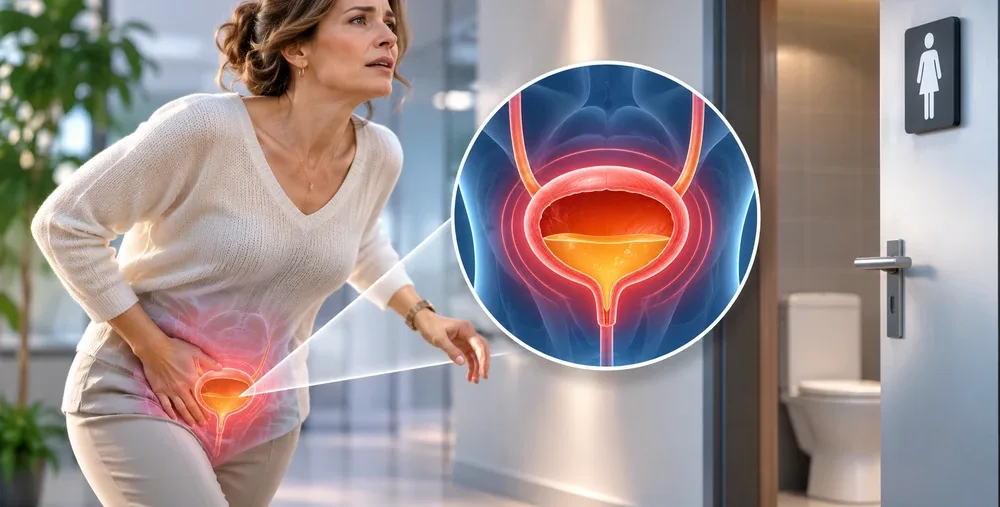
A sudden, overwhelming urge to urinate followed by involuntary urine leakage before reaching the toilet is the most characteristic symptom of urge urinary incontinence.
This condition does not affect only older women and should not be considered a normal or inevitable part of aging.
Treatment for urge urinary incontinence may include bladder training, medications, and, in certain cases, surgical or other specialized procedures.
What Is Urge Urinary Incontinence?
Urge urinary incontinence is the involuntary leakage of urine that occurs when a person suddenly experiences a strong, difficult-to-control urge to urinate and cannot reach the toilet in time.
This condition is commonly associated with an overactive bladder. The bladder may create a sudden urge to urinate even when it is not completely full.

What Are the Symptoms of Urge Urinary Incontinence?
-
Sudden, urgent need to urinate
-
Urine leakage before reaching the toilet
-
Frequent urination
-
Waking up at night to urinate
-
Difficulty delaying urination
What Causes Urge Urinary Incontinence in Women?
Urge urinary incontinence can occur when the bladder muscle contracts involuntarily before the bladder is full, creating a sudden and difficult-to-control need to urinate.
As a result, a person may struggle to hold urine and experience leakage before reaching the toilet.
Common factors associated with urge urinary incontinence in women include increasing age, hormonal changes during menopause, and certain neurological conditions that affect bladder control.
Excessive consumption of tea or coffee and constipation can also worsen urinary urgency and frequent urination.
Urinary tract infections can cause similar symptoms, including sudden urinary urgency and urine leakage.
Therefore, identifying the underlying cause is essential before choosing the appropriate treatment. A medical examination and urine tests may be necessary.
How Is Urge Urinary Incontinence Treated?
The first step in treating urge urinary incontinence usually involves bladder training and changes to daily habits.
If these approaches do not provide sufficient improvement, medication may be recommended.
For patients whose symptoms continue despite initial treatment, bladder Botox injections or other specialized treatment options may be considered.
Not every patient requires the same treatment. The most appropriate approach depends on symptom severity, medical history, and overall health.
Prof. Dr. İsmail Mete İtil, a gynecologist in Izmir, evaluates examination findings and diagnostic test results together to develop an individualized treatment plan for women experiencing urinary incontinence.
Can Urge Urinary Incontinence Be Treated Without Surgery?
Yes. Urge urinary incontinence can often be managed without surgery.
Bladder training, adjusting fluid intake, pelvic floor exercises, and medications can help reduce the frequency of urine leakage.
These non-surgical treatments are commonly recommended before considering more invasive procedures.
Does Bladder Training Help With Urge Urinary Incontinence?
Bladder training is a non-surgical treatment designed to reduce sudden urinary urgency and urine leakage before reaching the toilet.
The aim is to help patients gradually improve bladder control, increase the time between bathroom visits, and reduce the constant need to urinate.
Bladder training for urge urinary incontinence begins by recording how frequently a person urinates throughout the day.
The intervals between bathroom visits are then gradually increased at a comfortable and manageable pace.
When a sudden urge to urinate occurs, staying calm, breathing slowly, and briefly contracting and relaxing the pelvic floor muscles may help control the urge.
Bladder training generally needs to be practiced consistently for at least 6 weeks to assess its effectiveness.
What Medications Are Used for Urge Urinary Incontinence?
Medications used to treat urge urinary incontinence help reduce involuntary bladder contractions or improve the bladder's ability to store urine. The prescribing doctor considers the patient's blood pressure, existing medical conditions, and other medications before selecting a treatment.
Possible side effects may include dry mouth, constipation, or changes in blood pressure.
For this reason, medication should be prescribed and monitored by a qualified medical professional.
Is Surgery Necessary for Urge Urinary Incontinence?
Traditional urinary incontinence surgery is not usually the first treatment option for urge urinary incontinence.
Sling procedures, commonly used to treat urine leakage during coughing or physical exertion, are not standard treatments for incontinence caused solely by sudden urinary urgency.
For patients whose symptoms do not improve with initial treatments, specialized options such as sacral nerve stimulation or tibial nerve stimulation may be considered.
How Is Urge Urinary Incontinence Treated After Menopause?
After menopause, vaginal dryness and changes in the tissues surrounding the urinary tract may occur alongside bladder symptoms.
In suitable patients, local vaginal estrogen therapy may be recommended in addition to bladder training and medications.
However, hormone treatment is not necessary for every patient and does not resolve all types of urinary incontinence on its own.
The appropriate treatment depends on the patient's symptoms, medical history, and examination findings.
How Is Urge Urinary Incontinence Diagnosed?
Diagnosis begins with a detailed assessment of the patient's symptoms and medical history.
A pelvic examination and urinalysis are usually performed.
In some cases, patients may be asked to keep a bladder diary for several days to record fluid intake, urination frequency, and episodes of urine leakage.
Ultrasound imaging or additional bladder function tests may also be recommended when necessary.
Symptoms such as blood in the urine, pain, or difficulty emptying the bladder require further medical evaluation.
Urge Urinary Incontinence Treatment Costs in 2026
The cost of urge urinary incontinence treatment in Izmir depends on the patient's symptoms, the severity of urinary leakage, and the treatment method required.
For some patients, bladder training and medication may be sufficient. Others may require bladder Botox injections or additional treatment procedures.
There is no single treatment method suitable for every patient with urge urinary incontinence.
The underlying cause of urinary leakage must first be investigated through a medical examination and, when necessary, diagnostic tests.
An individualized treatment plan can then be developed.
Therefore, an accurate assessment of urinary incontinence treatment costs requires an initial consultation with a specialist.
Conclusion: Treatment for Urge Urinary Incontinence
Urge urinary incontinence can significantly affect daily activities, social life, and personal comfort. However, symptoms can often be managed with appropriate treatment.
Treatment options include bladder training, medications, and specialized procedures when necessary.
Prof. Dr. İsmail Mete İtil, a gynecologist in Izmir, evaluates urinary incontinence symptoms, pelvic floor function, and associated medical conditions to create an individualized treatment plan for each patient.
Medical Disclaimer: This article is intended for general informational purposes only and does not replace professional medical advice, diagnosis, or treatment. Please consult a qualified medical specialist for an accurate diagnosis and appropriate treatment.
Prof. Dr. İsmail Mete İtil | Specialist in Obstetrics and Gynecology